Pyramids of Giza, Egypt: History, Facts & Visitor Guide
Pyramids of Giza, Egypt: History, Facts & Visitor Guide
The Pyramids of Giza are the most famous monuments on Earth, and one of the few ancient wonders you can still stand in front of today. They rise from the desert on the western edge of Cairo, built more than 4,500 years ago by a civilization that had no cranes, no iron tools and no wheeled carts for heavy loads, yet produced structures that are still impressive in the twenty-first century.
This guide covers everything travelers ask about the Pyramids of Giza in Egypt: who built them, how they were built, the story of each pyramid, what is inside, the best time to go and how to plan your visit without stress.
What are the Pyramids of Giza?
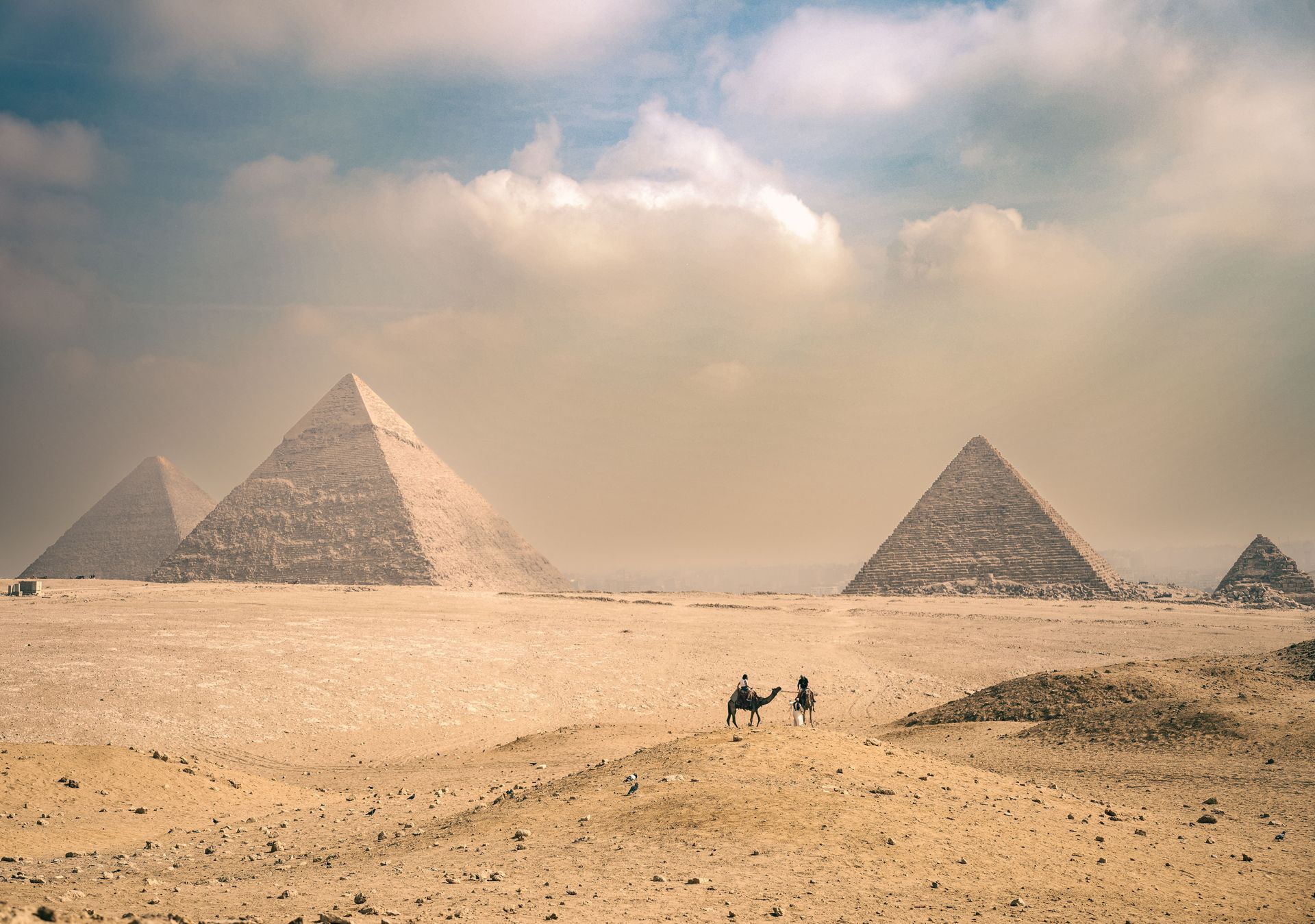
The Pyramids of Giza are a group of royal tombs on the Giza Plateau, built during Egypt's Fourth Dynasty, in the period historians call the Old Kingdom. The complex has three main pyramids, each built for a different king, along with smaller queens' pyramids, mastaba tombs for officials and relatives, causeways and temples.
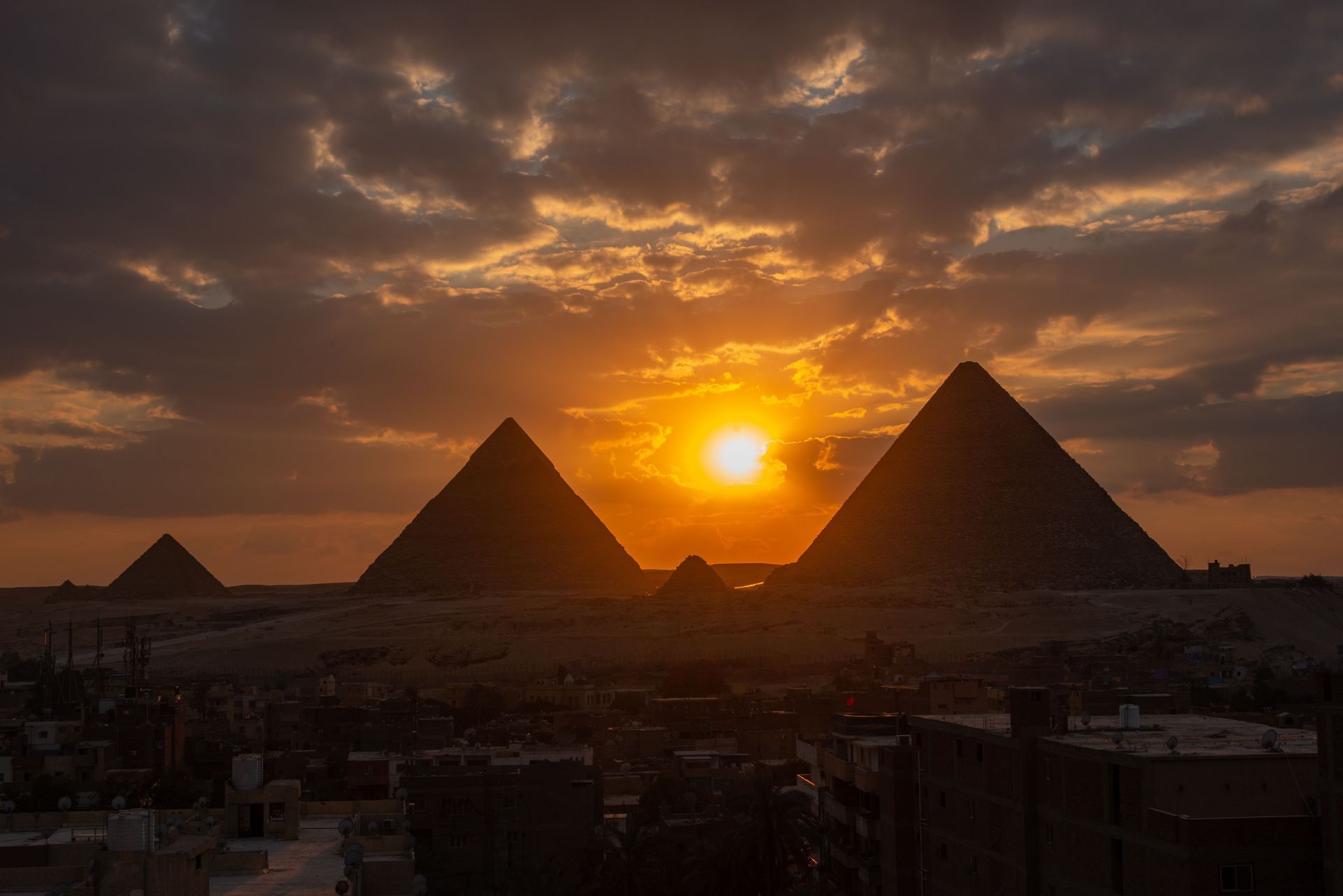
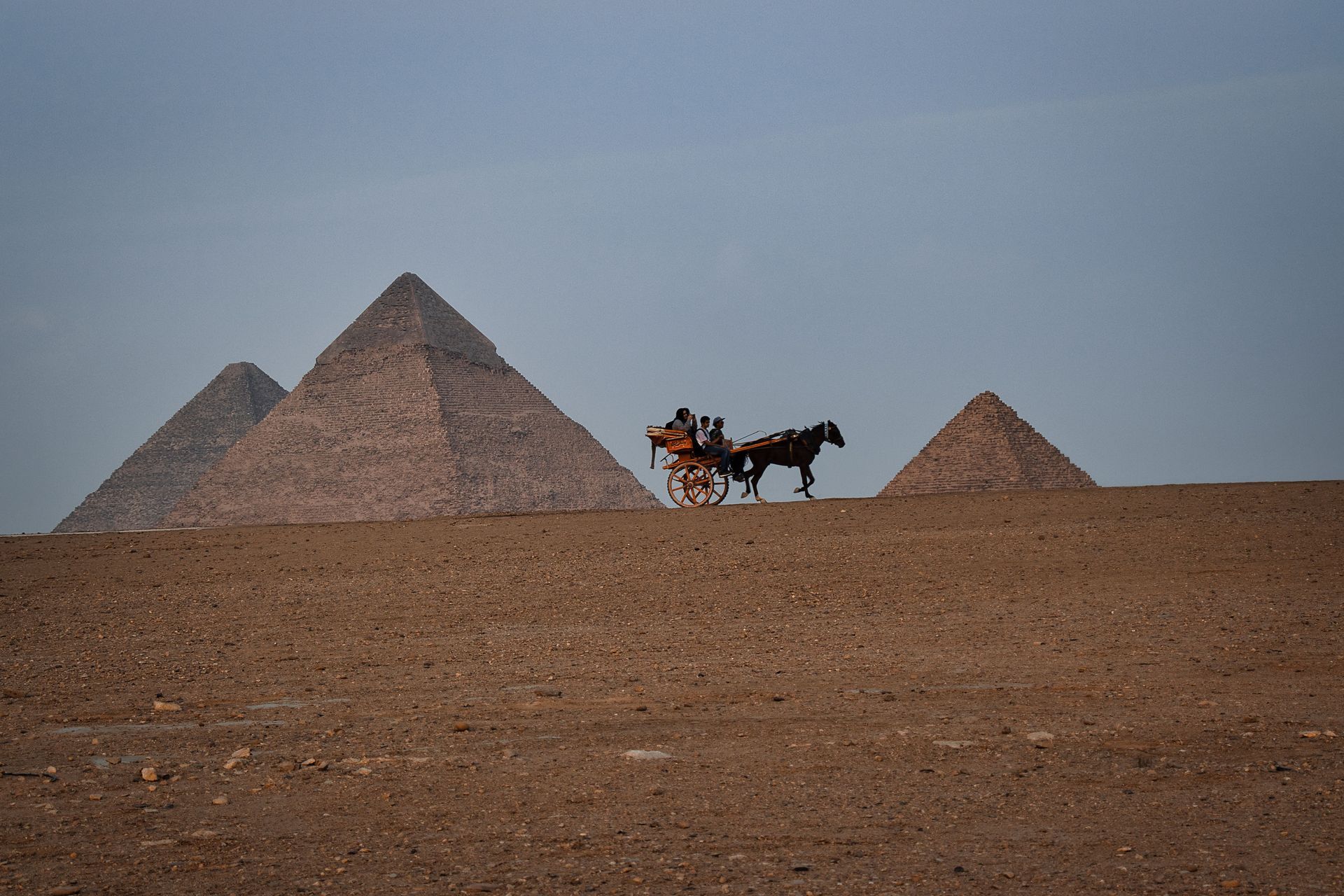
The three main pyramids belong to King Khufu, his son King Khafre and his grandson King Menkaure. Together they make up one of the most important archaeological sites in the world, and the Great Pyramid is the only one of the Seven Wonders of the Ancient World that is still standing.
Why were the pyramids built?
The pyramids were tombs, but they were far more than graves. Ancient Egyptians believed the king was a living link between the gods and the people, and that after death he continued his journey in the afterlife. The pyramid was designed to protect his body, hold his burial goods and help his spirit rise to the sky and join the gods.
The shape itself carried meaning. Many scholars believe the pyramid represented the sun's rays or the mound of creation in Egyptian belief, and a ramp to the heavens for the king's soul. Around each pyramid stood temples where priests carried out offerings and rituals for the king long after his death.
The Great Pyramid of Khufu
The Great Pyramid is the oldest, the largest and the most famous of the three. It was built around 2560 BC for King Khufu, also known by his Greek name Cheops.
Size and facts
- It originally stood about 146 meters high, and today it is a little shorter, at roughly 138 meters, because the smooth outer casing and the top have been lost over time
- Its base is about 230 meters on each side, covering an area of around 13 acres
- It is made of an estimated 2.3 million stone blocks, mostly local limestone, with granite used for some of the inner chambers
- For nearly 4,000 years, it was the tallest man-made structure on Earth
- Its sides are aligned almost perfectly with the four cardinal directions, which shows remarkable skill in surveying
What is inside the Great Pyramid?
The interior is a system of narrow passages leading to three main chambers. The Grand Gallery is a tall, corbelled corridor that climbs steeply toward the upper part of the pyramid. The King's Chamber, built mainly of red granite, contains an empty stone sarcophagus. Below it, the so-called Queen's Chamber and a deep underground chamber complete the main layout. Researchers have also used modern scanning technology to discover hidden voids inside the pyramid, so scientists are still learning about its structure.
Entering the Great Pyramid is possible but optional, and it is a physical experience: the passages are narrow, steep and hot, and the chambers are bare. It is not recommended for people with back problems, heart conditions or claustrophobia.
The pyramid of Khafre
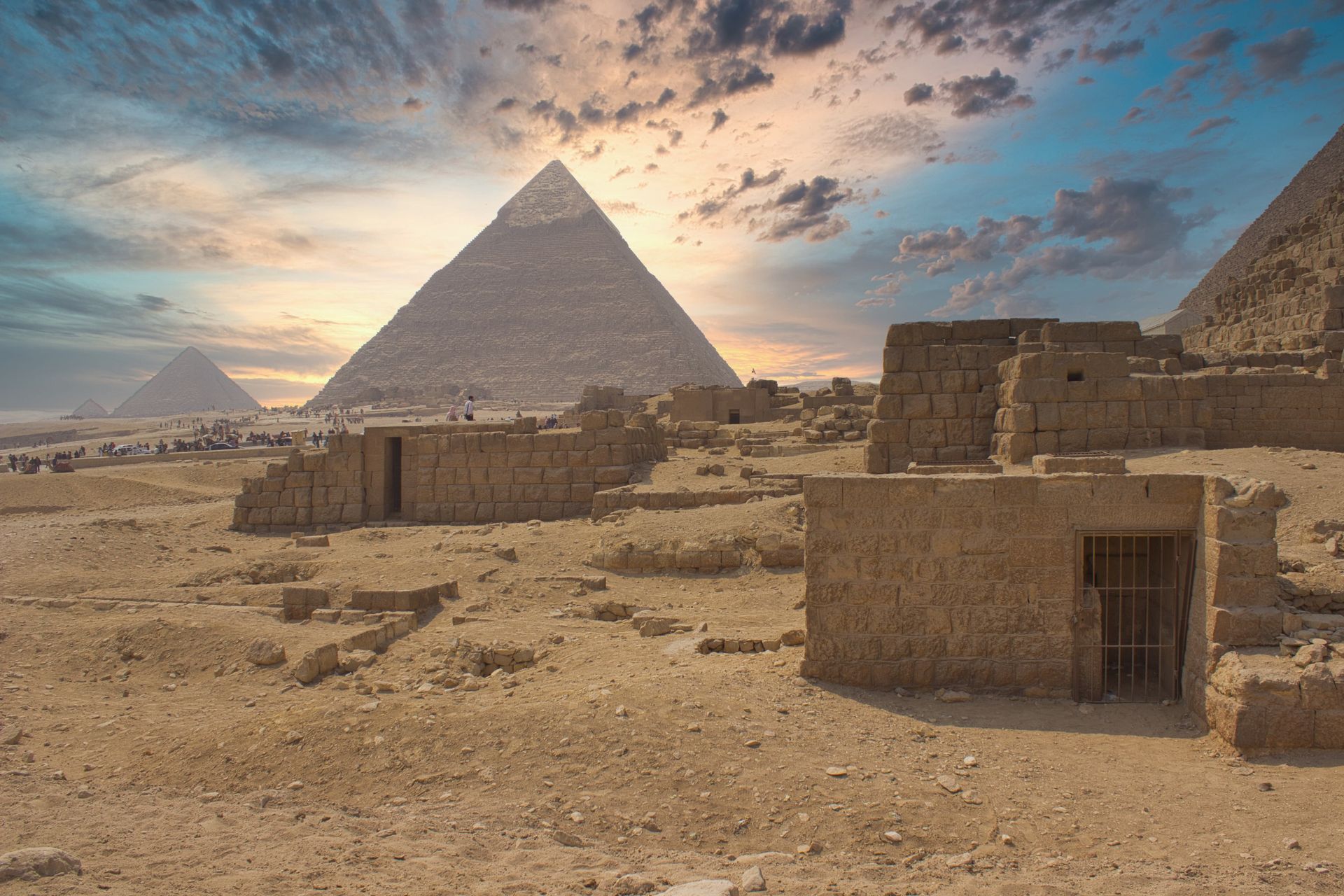
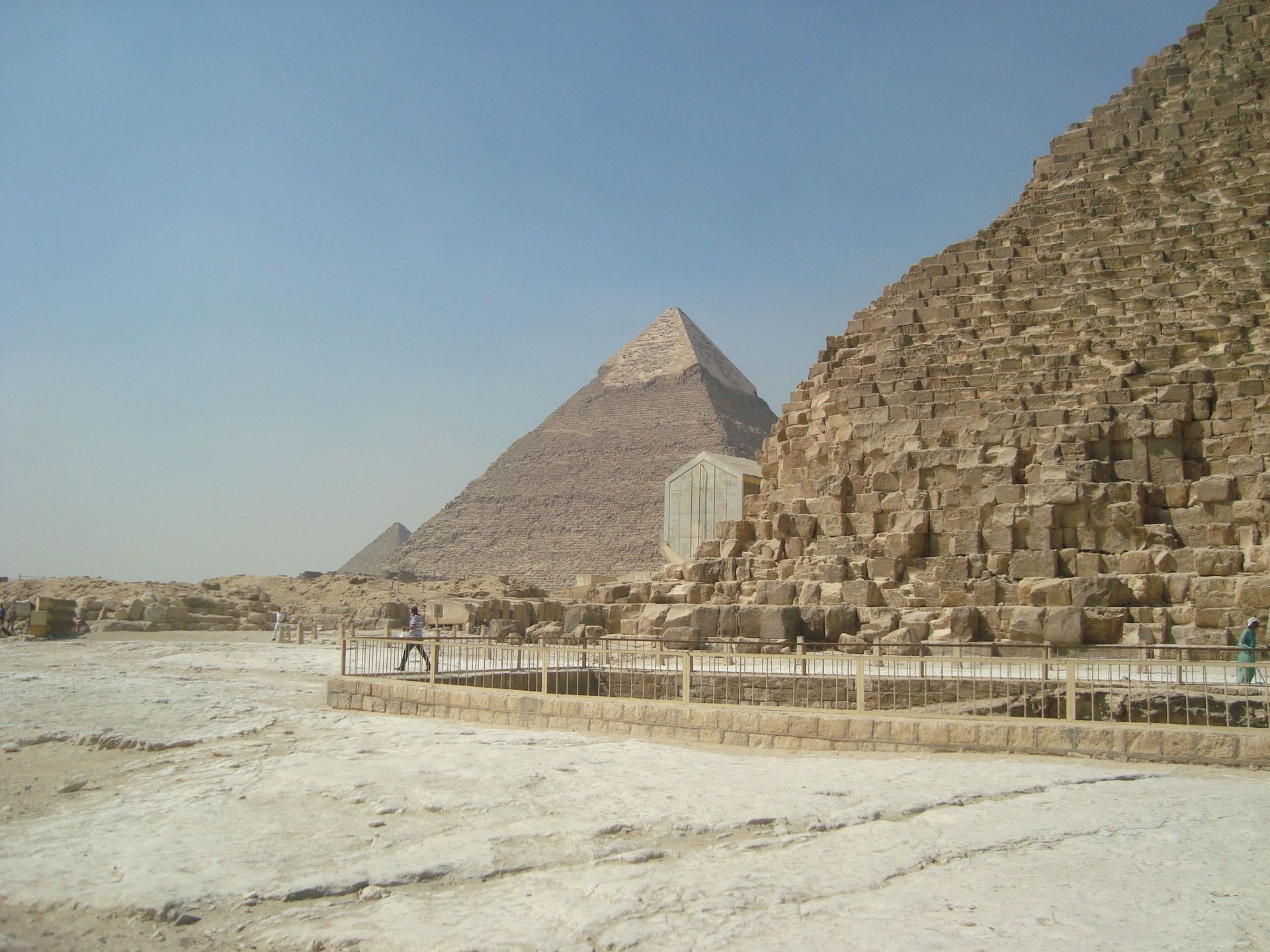
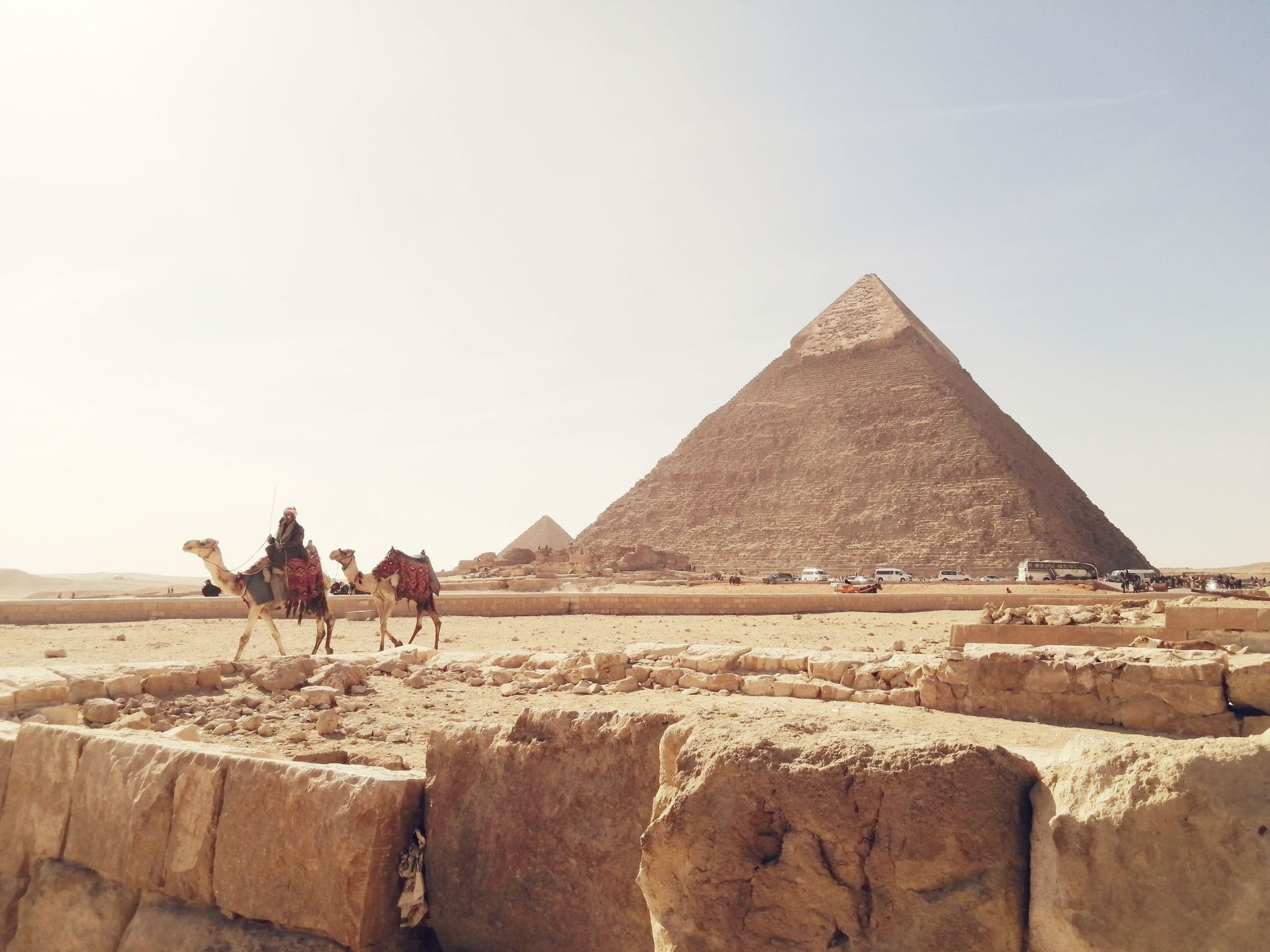
Khafre, Khufu's son, built the second pyramid just southwest of his father's. Originally about 143 meters high, it sometimes looks taller than the Great Pyramid because it stands on higher ground. The most noticeable detail is at the top: some of the original smooth limestone casing is still in place, which gives you an idea of how the pyramids once looked, with bright, polished sides.
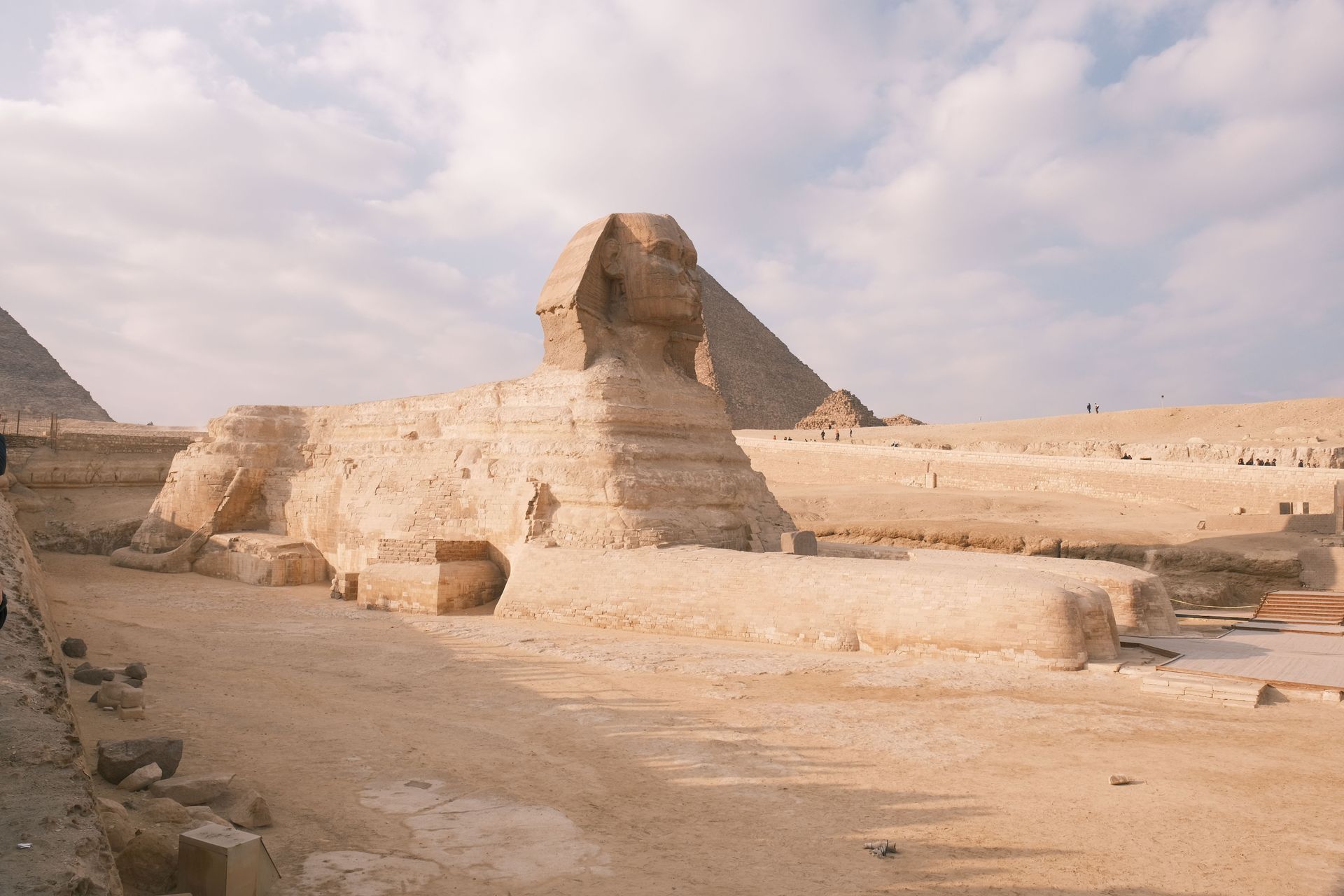
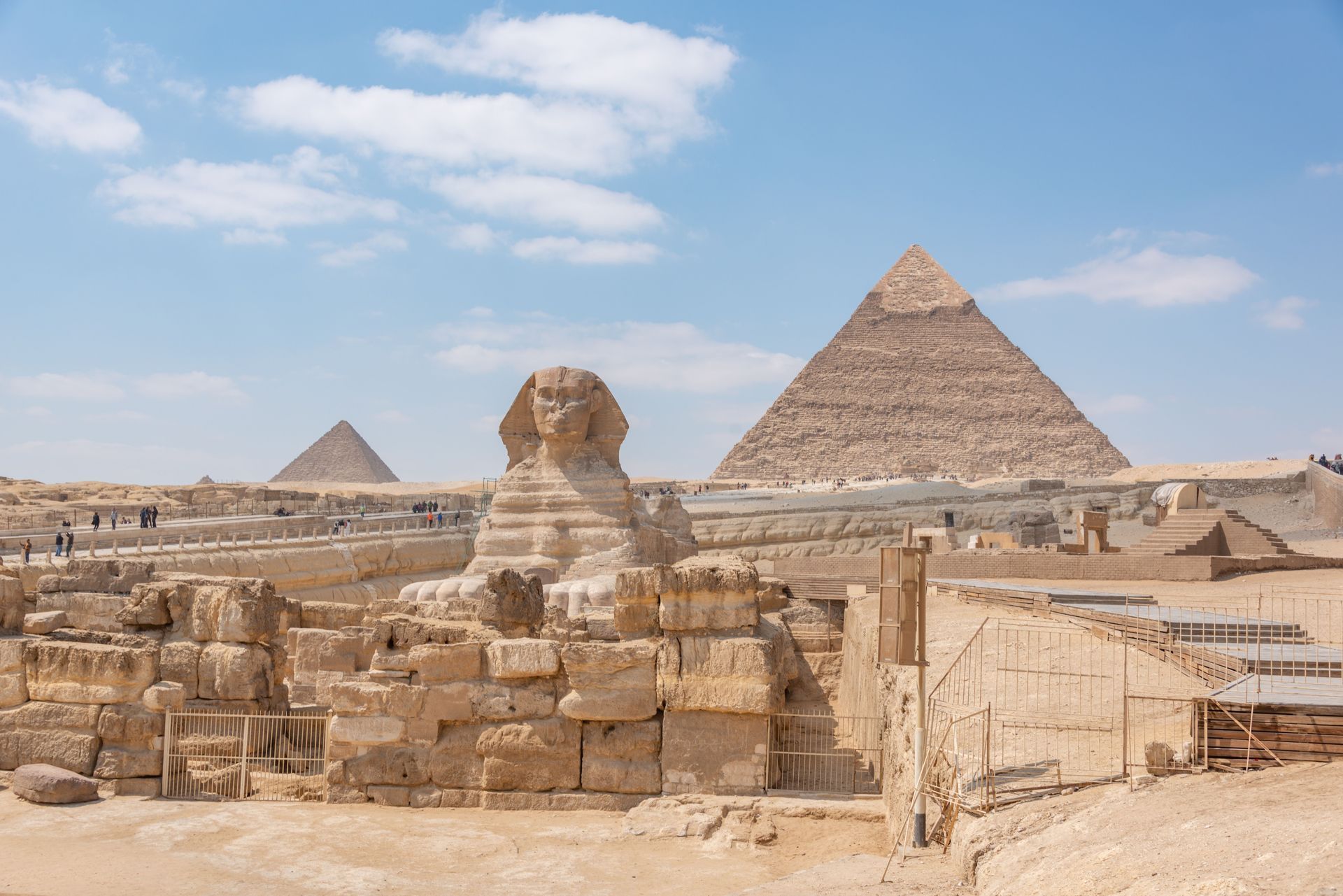
Khafre's pyramid is connected by a long causeway to his valley temple, and the Great Sphinx stands right beside that temple, so the whole group works as one connected royal complex.
The pyramid of Menkaure
The third main pyramid was built for Menkaure, Khafre's successor. It is the smallest of the three, at about 65 meters, but it was built with great care. Its lower courses were covered with red granite, and the remains of that granite are still visible. Three smaller satellite pyramids stand beside it, and they were probably built for royal women.
The queens' pyramids and the mastaba tombs
Next to the main pyramids, you will see smaller pyramids that belonged to queens and members of the royal family. Around them, rows of mastaba tombs, which are flat-roofed rectangular tombs, were built for nobles and officials who wanted to be buried close to their king. These cemeteries show how the pyramids were part of a whole planned city of the dead, not just three isolated monuments.
Who built the pyramids?
This is one of the most searched questions about the pyramids, and the answer is clear: they were built by Egyptian workers, not slaves.
Archaeologists have found the workers' town south of the plateau, along with bakeries, breweries, living areas and the tombs of the builders themselves, which were placed near the pyramids with honor. The evidence shows a large, organized workforce that was fed, housed and cared for, and whose members were proud enough of their work to be buried beside the king's monument. A permanent team of skilled craftsmen and builders worked on the site, supported by seasonal laborers.
How were the pyramids built?
Egyptologists do not agree on every detail, but the main points are well understood:
- Most of the stone was quarried near the plateau, which saved enormous effort in transport
- Finer limestone for the outer casing came from quarries across the Nile, and granite for inner chambers was brought from Aswan, over 800 kilometers to the south
- Workers moved heavy blocks on wooden sleds, and wetting the sand in front of the sled made it much easier to drag
- Ramps, probably of different designs, were used to raise blocks as the pyramid grew
- Skilled teams cut, shaped and fitted the stone with copper tools, stone hammers and a great deal of organization
Part of the story, the Khufu boat, was found buried beside the Great Pyramid, which shows how closely the king's afterlife journey was tied to the monument. One of these ancient ships is now displayed at the Grand Egyptian Museum.
Why the pyramids look different today
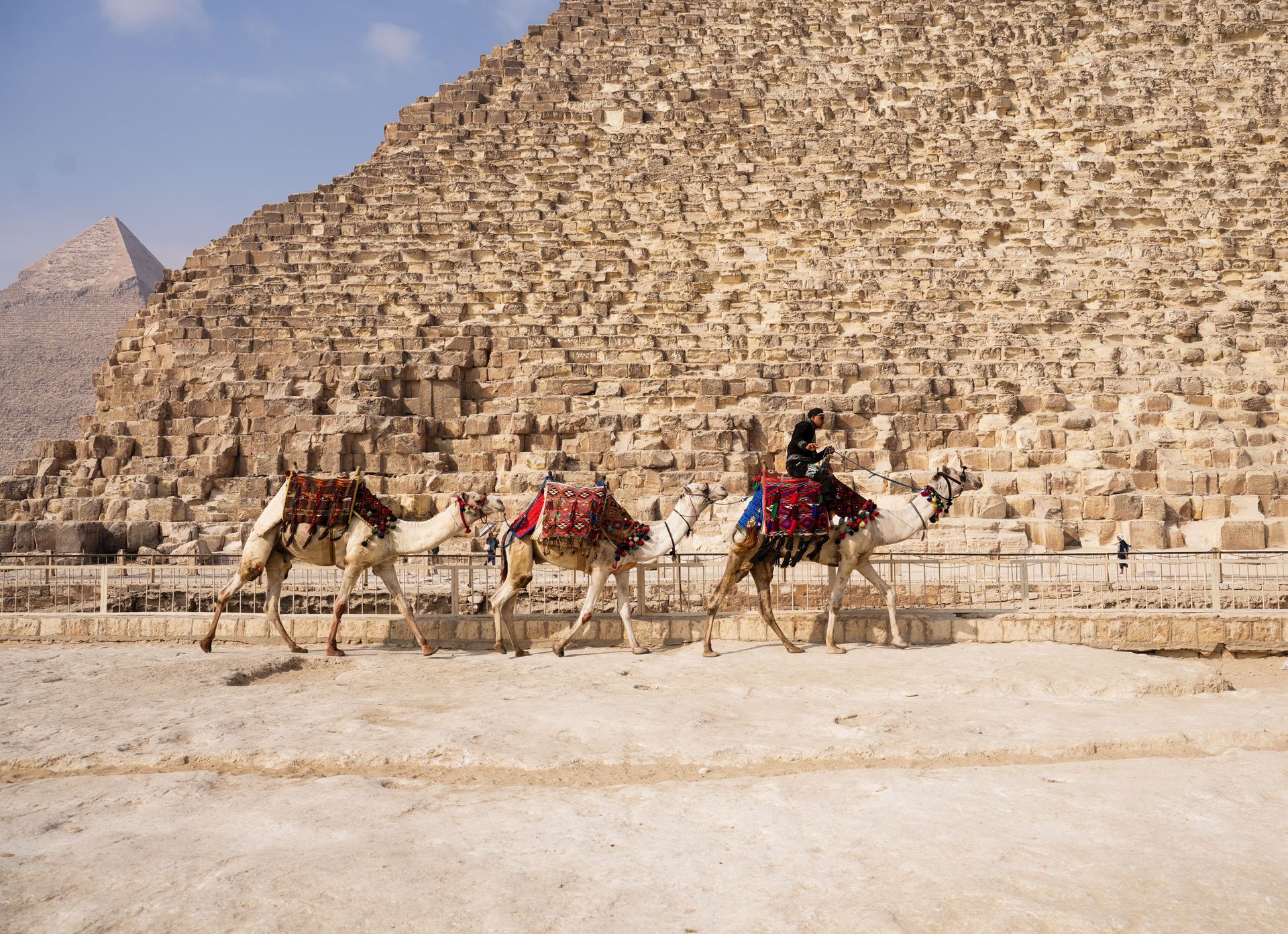
When they were completed, the pyramids were covered in smooth, polished white limestone that reflected the sun. Over the centuries, earthquakes loosened some of the casing, and much of the remaining stone was taken away to build mosques and buildings in medieval Cairo. This is why the Great Pyramid now looks stepped, with visible rows of stone blocks. Only a few casing stones remain, mainly at the base of the Great Pyramid and the top of Khafre's pyramid.
Visiting the Pyramids of Giza
What to see and do on the plateau
- Walk around the base of the three pyramids and see the size of the blocks up close
- Visit the panoramic viewpoint, where all three main pyramids appear together in one frame, the best spot for classic photos
- See the Great Sphinx, which stands near Khafre's valley temple
- Ride a camel across the sand, one of the most popular experiences on the plateau
- Explore the smaller queens' pyramids and the tombs around the main monuments
Best time to visit the Giza Pyramids
The most comfortable months are generally from October to April, when temperatures are milder. In summer, the plateau gets very hot by midday, with little shade, so the early morning is by far the best time to go. Mornings are also quieter and better for photos.
How much time do you need?
A good visit to the plateau takes around two to three hours, including walking, photos and time at the Sphinx. If you add a camel ride and lunch, a half-day tour of around five hours is a comfortable plan. If you also want to visit the Grand Egyptian Museum, which sits very close to the pyramids, a full day works best.
How to get to the Pyramids from Cairo
The Giza Pyramids are about 15 to 20 kilometers from central Cairo, and the drive usually takes 30 to 60 minutes depending on traffic. Taxis and ride-hailing apps are available, but a private car with a driver or guide is the easiest, since it takes you from your hotel to the best spots and back without any negotiation.
What to wear and bring
- Comfortable closed walking shoes, because the ground is sandy and uneven
- Light, breathable clothes that cover shoulders and knees
- Sunglasses, a hat or scarf and sunscreen
- Water, a camera and a charged phone
- A little cash for tips and optional extras
Tips to avoid hassle at the pyramids
Visitors sometimes meet unofficial sellers and people offering rides, photos or "free" gifts. A polite "no, thank you" and walking on is usually enough. Agree on prices before any camel or horse ride, and keep your belongings close. The simplest solution is to visit with a licensed local guide, who handles all of this for you and explains what you are seeing.
Is it worth visiting the pyramids with a private guide?
Yes, and this is especially true for first-time visitors. The pyramids are impressive on their own, but a guide turns them into a story: who each king was, why the pyramids look the way they do, what the tombs and temples were for. A private guide also means a private air-conditioned car with hotel pickup, your own pace and no waiting for a group.
On our half-day tour, you visit the Giza Pyramids and the Sphinx with a private local guide, enjoy a camel ride in the Giza Panorama area, and finish with an Egyptian lunch at a rooftop restaurant overlooking the pyramids and the Grand Egyptian Museum.
Frequently asked questions
How old are the Pyramids of Giza?
The Great Pyramid was built around 2560 BC, so it is more than 4,500 years old. The other two main pyramids followed within a few generations.
How many pyramids are in Giza?
There are three main pyramids, those of Khufu, Khafre and Menkaure, along with several smaller queens' pyramids and satellite pyramids.
Which is the biggest pyramid in Giza?
The Great Pyramid of Khufu is the biggest. The pyramid of Khafre sometimes looks taller because it stands on higher ground.
Who built the pyramids of Giza?
Skilled Egyptian workers and craftsmen built them, as shown by the workers' town and tombs found near the plateau. They were not slaves.
Can you go inside the Great Pyramid?
Yes, entry is possible but optional and usually costs extra. The passage is narrow, steep and hot, so it is not suitable for everyone.
How long does it take to visit the pyramids?
Around two to three hours for the plateau, or about five hours for a half-day tour with a camel ride and lunch.
What is the best time of day to visit?
Early morning, when it is cooler and quieter.
Are the pyramids worth visiting?
Yes. Standing in front of them is one of the most memorable experiences in Egypt, and no photo prepares you for the scale.
Can I see the pyramids and the Grand Egyptian Museum on the same day?
Yes. The museum is only about two kilometers from the plateau, and many travelers see both in one day.
See the Giza Pyramids for yourself
The pyramids have been drawing travelers for thousands of years, and they still do exactly what they were built to do: make you stop and look. Pick your day, bring a camera and a sense of wonder, and let us take care of the guide, the car and the plan.
Book your Giza Pyramids half-day tour here: Half Day to Giza Pyramids & Sphinx, Camel Ride, Rooftop Lunch
Want the Grand Egyptian Museum too? Private Guided Tour Giza Pyramids Sphinx Grand Egyptian Museum
Browse our private tours: Private tours booking page
Questions? Chat with us on WhatsApp: wa.me/+201147073676