Saqqara Egypt Guide: Step Pyramid, Tombs & Private Tour
Saqqara Egypt Guide: Step Pyramid, Tombs & Private Tour
Saqqara is one of the most important archaeological sites in Egypt, and one of the most underrated. While most visitors rush to the Giza Plateau, travelers who add Saqqara to their trip discover the place where the pyramid age actually began: the first great stone monument, the oldest religious texts ever carved, and tombs so richly painted that they feel like open-air picture books of ancient life.
This guide explains everything about Saqqara, Egypt: its history, what you will see there, how it connects to the Grand Egyptian Museum, why a felucca ride on the Nile is the perfect ending, and all the practical details you need to plan a smooth private day trip from Cairo or Giza.
What is Saqqara and where is it?
Saqqara is a vast ancient burial ground on the western edge of the Nile Valley, roughly 30 kilometers south of central Cairo. It stretches for several kilometers along the desert plateau and is one of the largest archaeological sites in Egypt.
It was the necropolis of Memphis, the first capital of a unified Egypt. Because Memphis remained an important city for thousands of years, Saqqara was used for burials from the earliest dynasties right through the Greek and Roman periods. That makes it a record of more than 3,000 years of Egyptian history in one place. Together with Giza, Abusir and Dahshur, it forms the UNESCO World Heritage site known as Memphis and its Necropolis, the Pyramid Fields from Giza to Dahshur.
Why Saqqara matters in the story of Egypt
Egypt's famous smooth-sided pyramids did not appear overnight. They are the result of centuries of experiments, and Saqqara is where the first big step was taken.
Before Saqqara, Egyptian kings were buried in mudbrick mastabas, which are flat-roofed rectangular tombs. Around 2670 BC, King Djoser of the Third Dynasty and his architect Imhotep changed everything by building his tomb in stone and stacking mastabas of decreasing size on top of one another. The result was the Step Pyramid, and it set Egypt on the road that led to the pyramids of Giza less than a century later.
The Step Pyramid of Djoser
The Step Pyramid is the centerpiece of Saqqara and one of the most important buildings in Egypt. It rises in six tiers to about 60 meters and is generally regarded as the earliest large-scale stone building in the world.
What many visitors do not realize is that the pyramid is only part of a much larger complex. Djoser's funerary enclosure is surrounded by a long limestone wall with carefully carved false doors. Inside are courtyards, chapels and ceremonial buildings, many of them solid, built only in stone so the king could use them in the afterlife. The entrance corridor is lined with tall stone columns shaped like bundles of reeds, among the earliest stone columns in history.
Walking through this complex, you are not just seeing a monument. You are seeing the moment when Egyptian architects realized stone could last forever.
The pyramids of Unas and Teti: the oldest religious texts in the world
Saqqara also contains smaller pyramids from the Fifth and Sixth Dynasties. On the outside they look modest, but inside they hold something extraordinary.
The pyramid of King Unas is the first to have its burial chamber walls covered with the Pyramid Texts, a collection of spells and prayers meant to help the king ascend to the sky and join the gods. They are the oldest known religious writings in the world. The pyramid of Teti, a Sixth Dynasty king, also contains these texts, and its chambers can be entered at times. Which interiors are open depends on conservation work, so your guide will confirm what you can enter on the day of your visit.
The painted tombs: daily life in ancient Egypt
For many travelers, the tombs of Saqqara are the biggest surprise. They belong to high officials of the Old Kingdom, and their walls are decorated with detailed carved and painted scenes.
The mastaba of Mereruka is one of the largest private tombs at Saqqara, with more than 30 rooms. Mereruka was a vizier and the son-in-law of King Teti, and his tomb shows hunting scenes, boats on the Nile, craftsmen at work and the tomb owner himself. Nearby, the tomb of Kagemni, also a vizier, has lively scenes of fishing, farming and animals. The tomb of Ti, an official in the Fifth Dynasty, is celebrated for its sharply carved reliefs of boat building, hunting in the marshes and cattle crossing the river.
Together these tombs are among the best sources in Egypt for understanding how ordinary people lived, worked and imagined the afterlife. Which tombs are open can change, and your guide will choose the best ones available.
Other highlights at Saqqara
Saqqara is huge, and depending on time and access, your guide may also point out:
- The Imhotep Museum, a small museum near the site that displays finds from Saqqara and tells the story of the architect Imhotep
- The Serapeum, an underground gallery where sacred Apis bulls were buried in massive stone sarcophagi, when it is open
- The ruins around the Step Pyramid complex and the views over the palm groves of the Nile Valley
The Grand Egyptian Museum: where Egypt's treasures come together
After the open-air history of Saqqara, the Grand Egyptian Museum is the perfect contrast: a modern building where thousands of objects explain the same civilization in a different way. It is located close to the Giza Plateau and officially opened in November 2025.
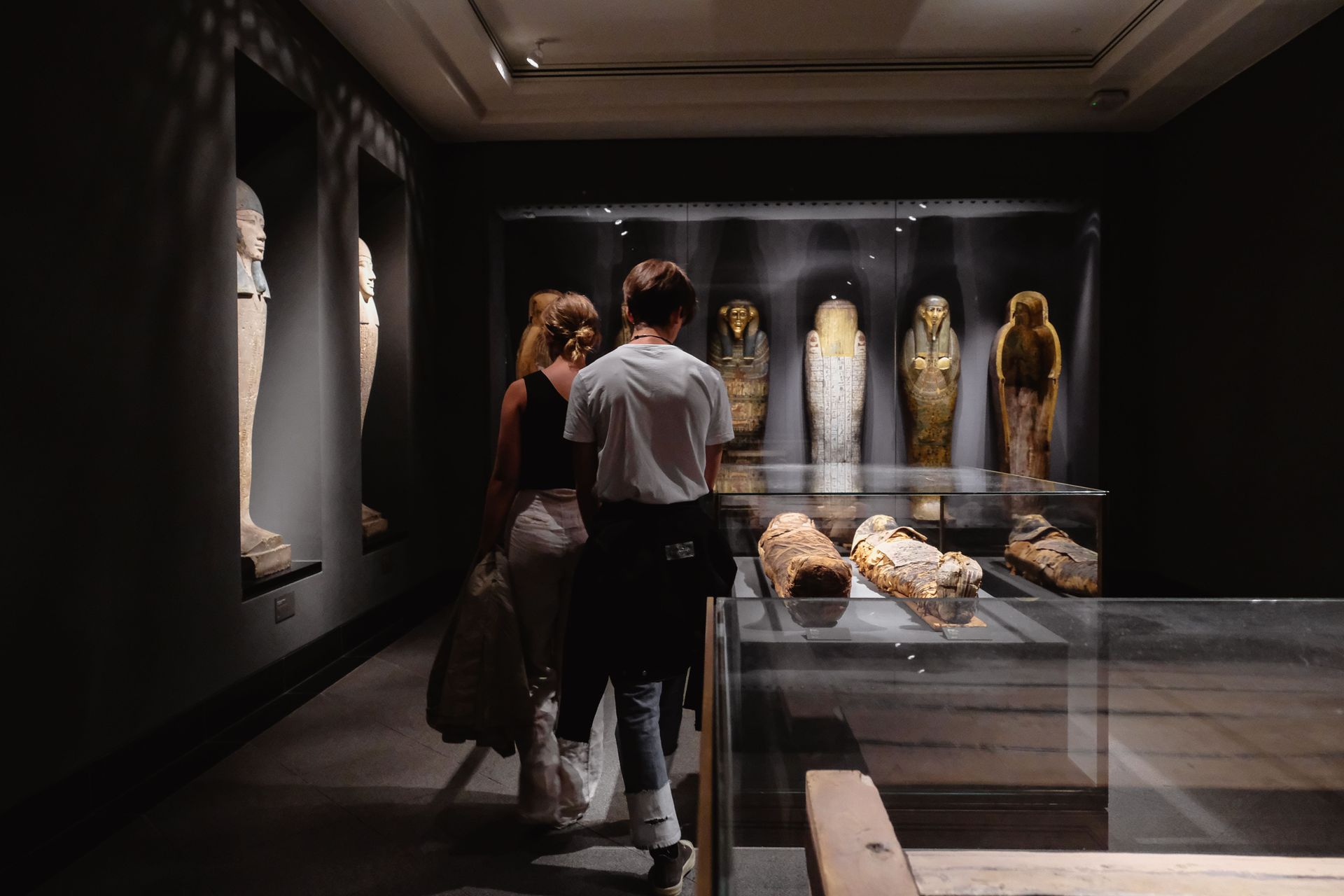
The museum's most famous attraction is the Tutankhamun collection. For the first time, the contents of the boy king's tomb are displayed together in one place, including gold furniture, chariots, jewelry, ritual items and funerary objects. It is the largest display of Tutankhamun's treasures ever shown in one museum, and seeing it as a single collection helps you understand how a royal burial in Egypt was planned.
Beyond Tutankhamun, the museum has galleries that follow Egypt from prehistory to the Greco-Roman era, colossal statues of kings and gods, and a Grand Staircase lined with ancient sculpture. Large windows frame views toward the pyramids.
Saqqara and the museum fit together well. Saqqara shows you where Egyptian monumental building began, and the museum shows you the objects, art and beliefs that the builders left behind.
A Nile felucca ride
Egypt owes its existence to the Nile, so the day ends on the river. A felucca is the traditional wooden sailboat of the Nile, with a single triangular sail, and it has been used for centuries to carry people and goods. A ride is slow and peaceful, with no loud engine, just wind, water and views of the Cairo skyline. After a full day of walking through Saqqara and the museum, it is the best way to rest and take your last photos of the day.
What the private tour includes
- Professional English-speaking guide throughout the day
- Private air-conditioned transportation to all sites
- Hotel pickup and drop-off in Cairo or Giza
- Lunch during the tour
- Nile felucca ride
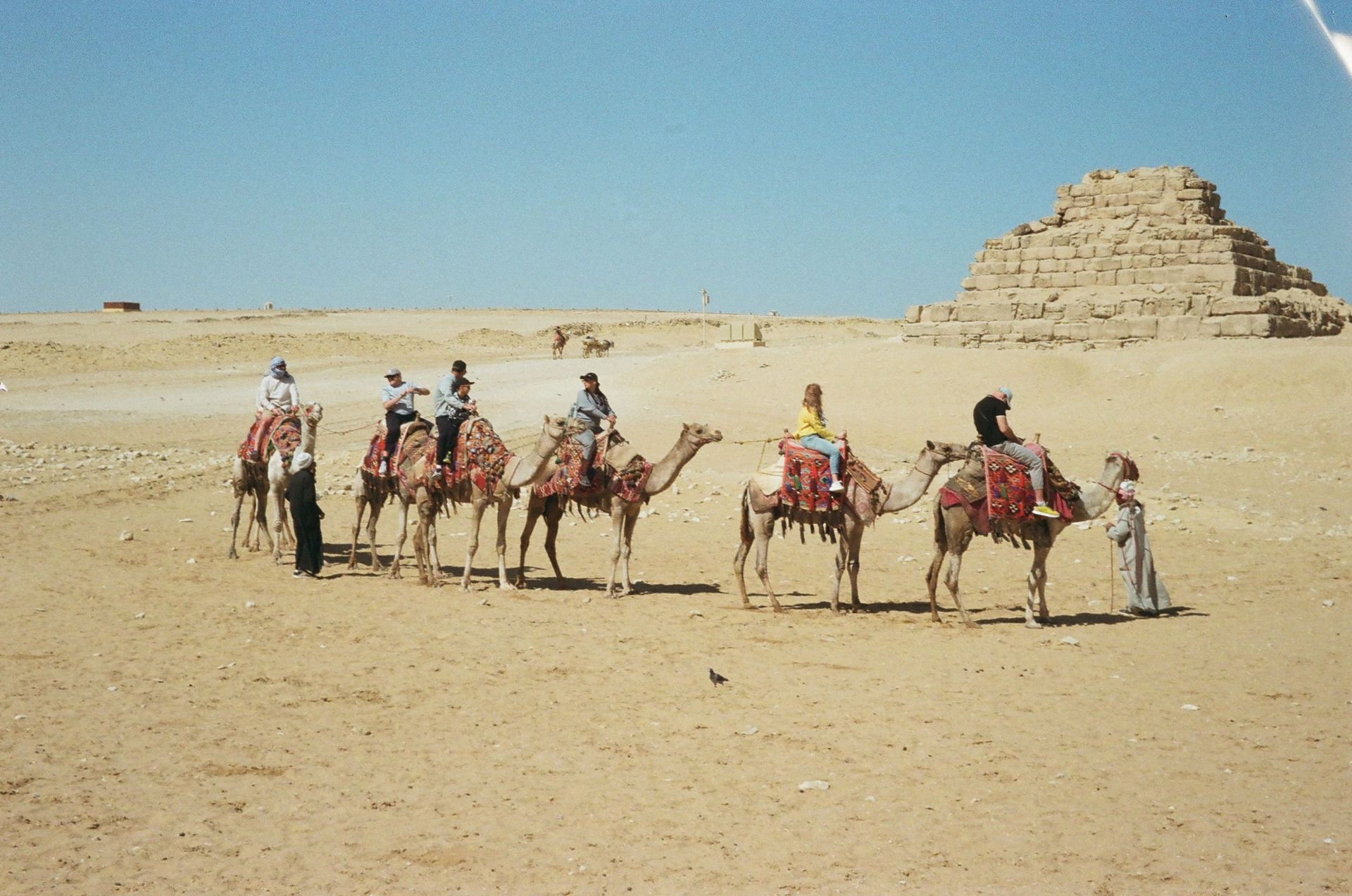
Tips for the guide and driver, personal expenses such as souvenirs or snacks, optional activities that can be added on-site (such as a camel ride), and drinks not provided with the meal are not included.
How long does it take and how hard is it?
The whole experience takes about seven hours. It is rated moderate in difficulty because of the walking. Saqqara and the museum can involve uneven surfaces, so basic fitness is needed. Wheelchair accessibility is limited at some sites, including Saqqara and parts of the museum. If you have mobility issues or serious health concerns, it is best to check with your doctor before booking. The tour is family-friendly, and infant seats are available in the private vehicle if requested.
Practical tips for visiting Saqqara, Egypt
- Wear comfortable, closed walking shoes, because the ground at Saqqara is sandy and uneven
- Bring a hat, sunglasses and sunscreen, since there is little shade at the pyramid complex
- Wear light, breathable clothing, and keep shoulders and knees covered out of respect for the sites
- Carry water and a camera, and ask your guide about photography rules inside tombs and the museum
- Visit in the cooler months, from October to April, if you can, since summer midday heat in Egypt can be intense
Why a private tour is the best way to see Saqqara
Saqqara is spread out, signs are limited, and many of its best details, such as the carved reliefs and hieroglyphic texts, are easy to miss without explanation. With a private guide you go at your own pace, spend more time on what interests you, and skip what does not. Having your own air-conditioned vehicle also means no waiting for public transport and no negotiating with drivers between sites. For families and first-time visitors to Egypt, this makes a big difference.
Frequently asked questions
Is Saqqara worth visiting if I am already seeing the Giza pyramids?
Yes. Saqqara shows you how pyramid building started, and it has things Giza does not: the Step Pyramid, the Pyramid Texts and colorful tombs. It is also usually much quieter.
How far is Saqqara from Cairo?
It is roughly 30 kilometers south of central Cairo, and with a private vehicle the drive is typically under an hour, depending on traffic.
Can I see Saqqara and the Grand Egyptian Museum in one day?
Yes. This private tour combines them with lunch and a Nile felucca ride in about seven hours, with hotel pickup and drop-off in Cairo or Giza.
Is the tour suitable for children?
Yes, it is family-friendly. Children should be supervised, and infant seats are available in the vehicle on request.
What should I bring?
Comfortable walking shoes, light clothing, sun protection and a camera.
Visit Saqqara, Egypt with a Private Guide
Saqqara is where Egypt's pyramid age began, and it remains one of the most rewarding places to visit in the country. Combined with the Grand Egyptian Museum and a calm felucca ride on the Nile, it makes a complete, relaxed day that shows Egypt's history from its first stone monuments to its greatest treasures. Book your private tour today, and let us handle everything from hotel pickup to lunch.
Book this tour here: Saqqara, Grand Egyptian Museum & Nile Felucca Day Trip
Browse our private tours: Private tours booking page
Questions? Chat with us on WhatsApp: wa.me/+201147073676